
Wondering how your internet is performing? Our internet speed test can help you check your download speed, upload speed, ping, and overall connection performance.
Running a speed test is a quick way to see how your connection is performing at that moment. Keep in mind that results can change depending on what’s happening on your network, the device you’re using, and whether you’re connected through Wi-Fi or Ethernet.
Run Your Internet Speed Test
To get started, click here to test your connection speed. When the page opens click “GO” on the speed test. The test will run for a short time and then display your results.
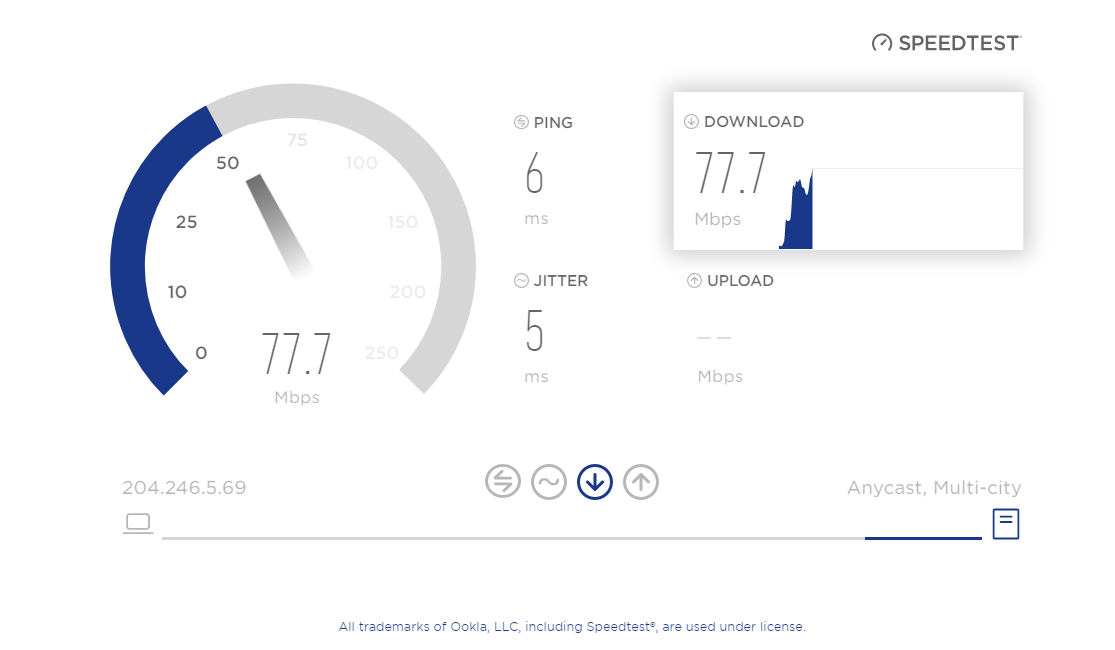
For a better picture of your connection, try running the test a few times. You may also want to test at different times of day or compare a Wi-Fi speed test with a wired Ethernet test.
For the most accurate results, pause large downloads or streaming, close unnecessary applications, and limit activity on other connected devices while the test is running.
What Does Download Speed Mean?
Download speed measures how quickly data travels from the internet to your device. It’s usually measured in Mbps, or megabits per second.
Your download speed affects things like:
- Streaming movies and TV
- Browsing websites
- Downloading games and files
- Using multiple devices at the same time
If several people in your home are streaming, gaming, or working online at once, more download bandwidth can help keep everything running smoothly. Connection quality, network congestion, and the number of devices using your internet can all affect your experience.
What Do Upload Speed, Ping, and Jitter Mean?
Your speed test, like ours, may show more than just download speed as seen here:
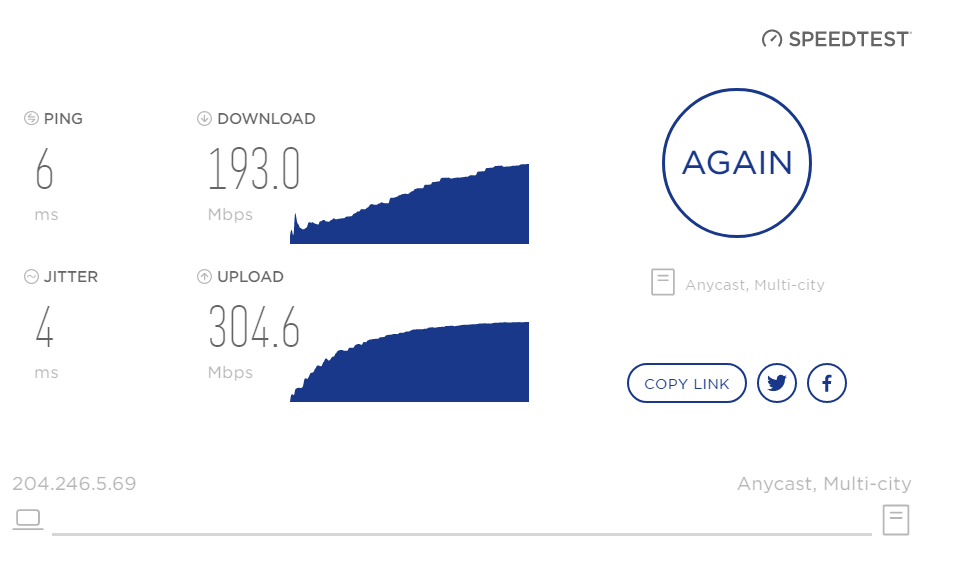
These additional measurements can give you a better picture of how your internet connection is performing. We’re here to help you understand what each result means and why it matters.
Upload speed measures how quickly information travels from your device to the internet. It matters when you’re on video calls, uploading files, backing up photos to the cloud, livestreaming, or sending large amounts of data.
Ping, also called latency, measures how quickly your connection responds. Lower latency can make activities like online gaming and video calls feel more responsive.
Jitter measures how much that response time changes. Large changes in latency can sometimes cause lag, choppy video, or other connection issues.
Looking at download speed, upload speed, ping, and jitter together can give you a better understanding of how your connection is performing.
Why Do My Speed Test Results Change?
If you run an internet speed test more than once, you may notice that the results aren’t exactly the same each time. That’s normal.
Your results can be affected by things like:
- Wi-Fi versus a wire Ethernet connection
- Distance from your router
- Other devices using your internet
- Streaming or downloads happening in the background
- Network congestion
- Your modem, router, or device
- The speed test server being used
- The time of day
If you want to see how much Wi-Fi may be affecting your connection, try testing once over Wi-Fi and again while connected directly to your router with an Ethernet cable. Looking to upgrade your Wi-Fi? Click here to learn more about TDS Whole home Wi-Fi.
What Should I Do If My Internet Speed Seems Slow?
If your results are lower than expected, there are a few simple things you can try.
Start by checking whether anyone else in your home is streaming, downloading large files, gaming, or doing something else that uses a lot of bandwidth. Then try moving closer to your router or restarting your modem and router.
If possible, connect your device directly to your router with Ethernet and test your internet speed again. If your wired results are noticeably better than your Wi-Fi test, the issue may be related to your wireless setup rather than your internet connection.
Your equipment can make a difference too. Older routers, computers, network cards, and wireless devices may not be able to take full advantage of faster internet speeds.
Understanding Your Speed Test Results
Speed test results can be affected by a number of factors, so they should be viewed as a snapshot of your connection at the time of the test.
Speed ranges are expressed as “up to” and represent network capabilities between the customer location and our network. Actual performance can vary based on factors such as network conditions, delivery technology, customer equipment, connected devices, distance from network equipment, and whether the connection is wired or wireless.
Additional terms, equipment requirements, service limitations, and plan-specific information may apply.