

The Scoop on TDS® Fiber Construction
Excitement is in the air because soon there will be TDS fiber in your area! Learn all the ins-and-outs of the construction process that will bring cutting-edge fiber internet services to your neighborhood.
Fiber-Optic Network Construction 101
A fiber-optic internet connection brings unmatched speed and reliability. A lot of planning and preparation goes into building a brand-new, fiber internet network. Before we break ground, we create a design for the network. That design includes where the infrastructure needs to be placed, and whether it will be constructed underground or by using utility poles. Once that plan is complete, we take it to the local municipality for approval.
Once approved, we ensure all necessary permits are obtained and work closely with our construction contractor partners to coordinate an efficient network build. We divide communities into smaller groupings to help launch service as soon as possible while ensuring high quality and safety standards are achieved.
Where Construction Takes Place and Access Rights
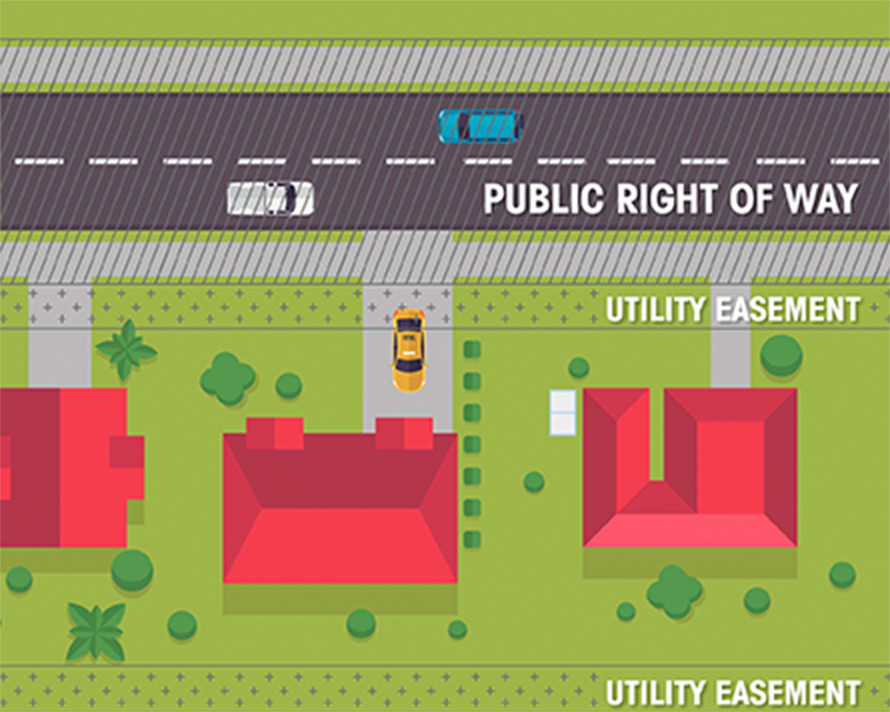
There are a couple of main designated areas where utility work, such as adding new fiber-optic network lines, often takes place. In both cases, TDS and our contractors have the right to work in these areas:
- Public Rights of Way: These usually include the street, terrace, and sidewalk areas. Prior to construction, TDS will have obtained permitting from the local municipality to work in these areas.
- Public Utility Easements: Managed by the county register of deeds, rather than by the local municipality. Like other utility companies, TDS has the right to work on utility easements, including those that may be in your front, side, or back yard. If the easement is within a fenced-in yard, crews will need your help accessing the area.
Learn More About Utility Easements
Watch this short video to learn more about utility easements.
Read more about public rights of way and utility easements.
If you have questions regarding a utility easement on your property, please call 1-855-259-8576.
When Construction Begins
We'll do our best to notify you when construction is about to begin. Be on the lookout for a door hanger with information, that crews will attempt to leave a few days before construction starts. We also typically have construction signage around work areas. A simple outline of what will/must happen as construction nears includes:
- A contractor marking underground utilities with flags or spray paint.
- The property owner is responsible for clearly marking any privately owned underground facilities (e.g., sprinkler systems, invisible fence, security systems, or private power) with flags or spray paint, and calling the construction hotline at 1-855-259-8576.
Safety Is Essential
The next few sections contain important information if the utilities and fiber network to your home are delivered through underground connections. TDS uses an independent contractor specializing in locating any existing underground utilities. This helps prevent damage to those facilities and adds a layer of safety for workers and residents. Once utility locations are identified, they will be marked with flags and/or spray paint. Please do not remove the flags or cut the grass where utilities are marked—they are essential to keeping you, your home or business, and workers safe! Crews will remove flags when it is safe to do so after construction is completed.
Flags will be used to indicate any of the following:
 Red = electric
 Yellow = gas, oil, or petroleum
 Orange = telecommunications
 Blue = potable water
 Green = sewer
 White = our proposed excavation
 Pink = property line/pin
What to Expect During Construction
When construction begins, we'll use cable placement techniques, such as directional drilling, to limit disruptions in the road right of way or utility easements the best we can. However, there will be areas where digging is required, and additional excavation is necessary.
Digging is a normal part of the construction process. We understand this is the time when people sometimes get nervous. Try not to worry. Digging is limited as much as possible, and we will clean up and repair the mess (learn more about that in Cleanup, Restoration, and Installation).
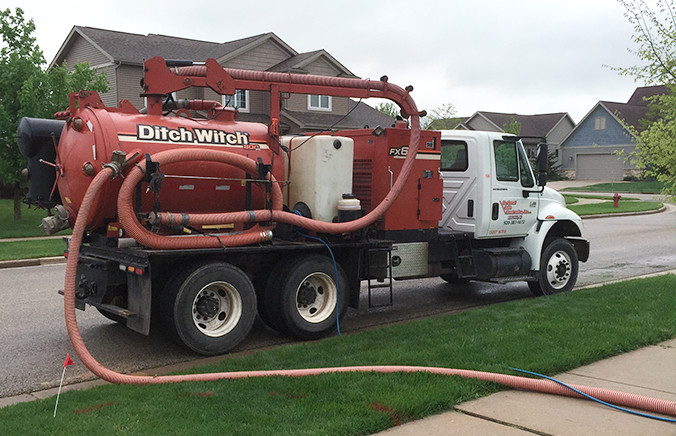
Our contractors use what is called a "vac truck" for the digging process. The vehicle acts both as a pressure washer and vacuum cleaner. Workers use the pressure washer to dig, loosening soil only in the spots they need to access. The vacuum hose is then used to suck up the dirt. This is a highly precise process designed to minimize mess and disruption to the area.
The Construction Process
Watch this short video that explains the construction process.
Installing Conduit
Installing fiber-optic cable in the ground is a multistage, multiday process. Work may appear to stop and start back up later, for various reasons. But, rest assured, once construction is completed, the technology used is very durable and should last a long time!
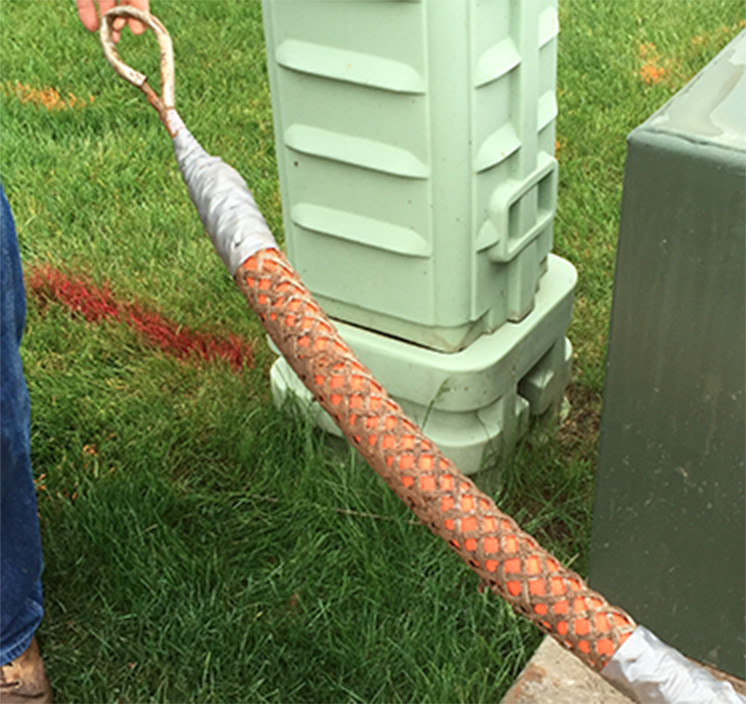
The bright orange tubing you may see, stored in large coils, is called conduit. On the inside, the conduit will, eventually, hold and protect our fiber-optic cable.
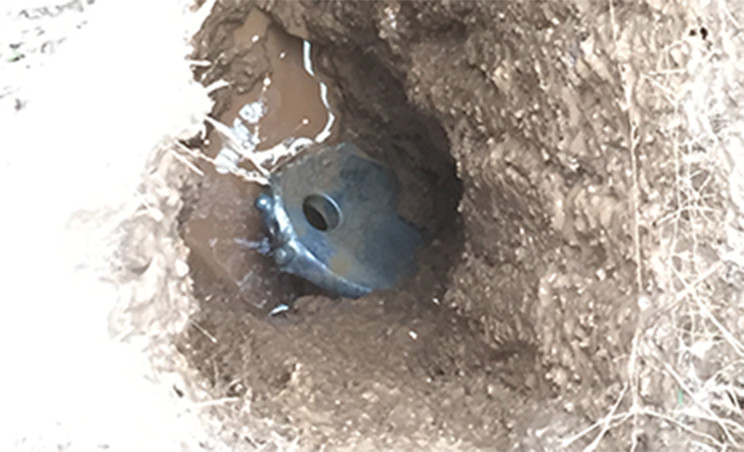
To install the conduit, we use a special drill that can reach up to 1,000 feet! It pushes through the dirt to the spot where we need to insert the fiber-optic cable. The metal piece shown in the second image is the tip of the drill.
The conduit is then attached to the open hole in the drill head. Once secured, the drill is reversed, and the conduit is installed by being pulled back through the ground.
Once the conduit is in place, we'll run and connect the fiber-optic cable through it and connect it to our infrastructure. This means not only "plugging in" the cable to the pedestal boxes or flush-mount mini vaults, but also making changes and upgrades to the larger hub boxes.
Fiber-optic cable is made from glass, which means, once it's in the ground, it cannot be found using standard metal-detecting equipment. The conduit we use has a thin, metal cable embedded, so it can be located once it's buried. This allows it to be located more easily in the future.
Connecting Your Home or Business to TDS Fiber
Once construction has been completed, you're just a few steps away from getting TDS fiber internet and related services.
We’ll let you know when fiber services have launched via mail, and/or email if you’re already a customer. If you responded to our communications to express interest in upgrading to fiber, we’ll contact you when we're ready to connect your home or business to the network. If you place an order for fiber service, a technician will place a "drop," which means they will splice in a cable either underground or by utilizing a utility pole. The method used to deliver other utilities to your building is typically indicative of the method TDS will use.
This drop work usually follows soon after mainline network construction, but sometimes must occur later on due to varying factors. We will restore any landscaping disruption from mainline construction work in the meantime. If you don’t order fiber service, we will not place a drop to your home or business. If you choose to order TDS service later, the drop work will need to be done at that time.
No appointment is necessary for the drop work to take place, and you do not have to be present during this time. The work will take place outside and can begin before service is available.
If the ground is frozen or too wet, a temporary drop, that lays on the ground, may be used. If this is the case, we will return to replace the temporary drop with a permanent drop. However, there may be a situation, such as needing to cross a driveway or sidewalk, in which a temporary drop cannot be used. In that instance, service installation has to wait until weather conditions allow for completion of a buried drop.
TDS Service Drop Information
Watch this short video about TDS service drop information.
Cleanup, Restoration, and Installation
The construction crew will not be the same crew doing the cleanup work. Typically within 2-3 weeks of the completion of construction, a separate cleanup and restoration crew will come to the site to repair any disrupted areas. This crew will:
- Fill and level any holes
- Apply topsoil and seed
- Add netting and straw to keep the seeding in place
Once you order fiber service, we'll contact you with your installation date. It's important to confirm your installation date or your appointment may be cancelled.
TDS Fiber Installation Process
Watch this short video about the TDS installation process.
The preceding information describes our typical construction scenarios. Please understand your experience may differ, due to local conditions or other intervening factors.
TDS Fiber Order Terms Reminder: When you order TDS fiber service you agree to be contacted by TDS with updates and when fiber service is available at your home. You also agree that TDS technicians may access your premises prior to installation to conduct a site survey and to place temporary or permanent facilities. This includes placing a buried or aerial fiber line to your home. See TDS terms and policies for more information.
TDS Fiber services not available in all areas. Delinquent accounts may lose service. Services subject to TDS Terms of Service at tdstelecom.com/tos and tdsbusiness.com/tos, TDS Privacy Policy at tdstelecom.com/privacy, and TDS Acceptable Use Policy at tdstelecom.com/use.

Use of this website is governed by the Website Terms of Use at https://tdstelecom.com/policies/terms-of-use.html.
TDS Telecom®, TDS Metrocom®, TDS TV®, and TDS® are registered trademarks of Telephone and Data Systems, Inc. are licensed to TDS Telecommunications LLC. Other product and company names mentioned on the Site may be trademarks of those respective owners. All materials are provided for noncommercial personal use only.
TDS Telecommunications LLC is a subsidiary of Telephone and Data Systems, Inc.
Copyright © , TDS Telecommunications LLC, All Rights Reserved.